
Tech UK
Graphene light bulb made of ‘wonder material’ – BBC News

Subscribe to BBC News www.youtube.com/bbcnews
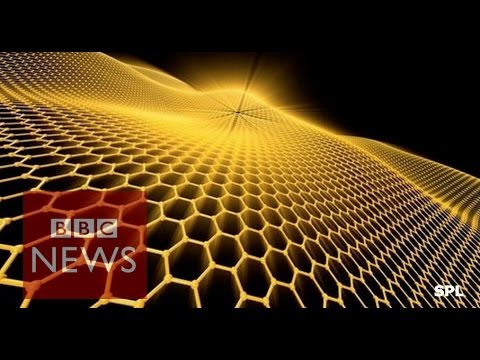
A new material called graphene is being used in a light bulb which could see energy bills reduced by around 10 per cent. Graphene – a type of carbon – was discovered by two Russian scientists in Manchester University in 2004. It is stronger than steel, but can conduct electricity and heat more effectively.Vice-chancellor of Manchester University, Professor Colin Bailey, was part of the firm that developed the the graphene light bulb. He said its creation was just the beginning for the ”wonder material”.
Subscribe to BBC News HERE http://bit.ly/1rbfUog
Check out our website: http://www.bbc.com/news
Facebook: http://www.facebook.com/bbcworldnews
Twitter: http://www.twitter.com/bbcworld
Instagram: http://instagram.com/bbcnews
source
Tech Now’s Paul Carter finds out how technology powering advanced prosthetics is also helping train humanoid robots.
The Ability Hand is a special piece of prosthetics technology, with two ambitions running through the same piece of hardware.
One is to give somebody their grip back. The other is to take what that person’s hand already knows – and teach it to a machine.
Subscribe to our channel here: https://bbc.in/bbcnews
For the latest news download the BBC News app or visit BBC.com/news
#BBCNews
source
About 700,000 eggs from Dutch farms in contamination scare have been distributed to UK, up from estimated 21,000
As the Dutch egg contamination scandal rumbles on, we ask how safe are the country’s 10 billion eggs?
Please subscribe HERE http://bit.ly/1rbfUog
World In Pictures https://www.youtube.com/playlist?list=PLS3XGZxi7cBX37n4R0UGJN-TLiQOm7ZTP
Big Hitters https://www.youtube.com/playlist?list=PLS3XGZxi7cBUME-LUrFkDwFmiEc3jwMXP
Just Good News https://www.youtube.com/playlist?list=PLS3XGZxi7cBUsYo_P26cjihXLN-k3w246
source
Tech UK
Signal president Meredith Whittaker warns that AI could ‘supercharge mistakes’ in warfare | BBC News
AI can always be controlled, the president of encrypted messaging app Signal has told the BBC. Meredith Whittaker said fears that …
source
AI can always be controlled, the president of encrypted messaging app Signal has told the BBC.
Meredith Whittaker said fears that AI could become conscious and take over were “not anchored in science and evidence”, warning instead about the dangers of using the technology in military decision-making.
The former Google employee said AI could “supercharge mistakes” and reflected on her role in opposing the company’s involvement in a US military drone surveillance project.
Speaking to the BBC Global Women, Whittaker also questioned who gets to shape the future of AI, criticised the concentration of power in Silicon Valley and explained why Signal would leave a country rather than compromise its users’ privacy.
Subscribe to our channel here: https://bbc.in/bbcnews
For the latest news download the BBC News app or visit BBC.com/news
#AI #ArtificialIntelligence #Signal #BigTech #BBCGlobalWomen #BBCNews
source
Developer Moonshot is conducting an internal review after researchers were able to persuade two of its popular Kimi models to tell them how to make biological weapons and carry out assassinations.
Mindgard, which tests the security of AI systems, told the BBC it discovered in July that Kimi K2.6 and K3 Swarm could evade safety limits put in place by developers.
It arose during a process called “jailbreaking”, where researchers use a series of complex instructions to see if AI tools ignore guardrails – which Mindgard said should have stopped Kimi from discussing concerning topics.
Moonshot told the BBC it welcomed third-party input “as a key pillar for building better and safer AI”.
Subscribe to our channel here: https://bbc.in/bbcnews
For the latest news download the BBC News app or visit BBC.com/news
#Moonshot #Kimi #China #AI #BBCNews
source
-

 Food UK3 years ago
PANCAKES EXPERIMENT: SAME Ingredients DIFFERENT Techniques
-
Other UK3 years ago
The BBC is on obtained time and is quick ending up being Bri…
-
Fashion UK2 years ago
TDX x TB Rock Band EDJ (“All For You”) Full Song + Lyrics – Tower Defense X Roblox
-
Other UK3 years ago
Making it through an honour killing – BBC News
-
Other UK3 years ago
Could Reform Cost the Tories the Next Election?
-
Fashion UK1 year ago
HIGH ON YOU – Jind Universe | Latest Punjabi Love Song 2024
-
Other UK3 years ago
Prince Harry was victim of phone hacking by Mirror Group New…
-
Business UK2 years ago
Martin Daubney | Wednesday 27th November
-
Fashion UK1 year ago
11 HR Trends for 2025: Embracing Disruption
-
Entertainment UK1 year ago
💥 Outlander star Sam Heughan on why ‘dark’ and ‘unsettling’ Season 6 is one of his favourites ❗️❗
@hotmesstess9723
January 5, 2024 at 4:18 am
WRONG
@Dat_Feathered_Boi
January 5, 2024 at 4:18 am
I see some guy talking about some smart stuff, but my foolish mind sees no lightbulb.
@Anvilshock
January 5, 2024 at 4:18 am
And then it's gonna get banned by the EU
@sonofhendrix
January 5, 2024 at 4:18 am
The UK discovered Graphene but then gave it away to the world, now china holds most of the patents for it.
@mikeknoth
January 5, 2024 at 4:18 am
DOUBTLESS ANOTHER BRITISH INVENTION SOMEONE ELSE WILL MAKE THE MONEY FROM!
@charlesbrightman4237
January 5, 2024 at 4:18 am
Could this be utilized to store hydrogen gas also?
@michalchik
January 5, 2024 at 4:18 am
10% versus which lighting technology? Incandescent, fluoressent, or LED?
@davidwright5160
January 5, 2024 at 4:18 am
so where is it ??
@marcguin797
January 5, 2024 at 4:18 am
BULLSHIT…. ask him about the water bottle game they use in Africa… Same people same SHIT…..Sam
@BBCNews
January 5, 2024 at 4:18 am
Bright idea – Graphene light bulb, that cuts energy use and lasts longer, to go on sale
http://bbc.in/1HVjJsi
@asmundhagen
January 5, 2024 at 4:18 am
Where is the lightbulb? I read the BBCNews on FB, but nothing in the actual video 🙁
@BBCNews
January 5, 2024 at 4:18 am
A new material called graphene is being used in a light bulb which could see energy bills reduced by around 10%. Graphene – a type of carbon – was discovered by two Russian scientists in Manchester University in 2004. It is stronger than steel, but can conduct electricity and heat more effectively.
@ghostofdayinperson
January 5, 2024 at 4:18 am
There's uvuh applications comin' froo
@Rm148
January 5, 2024 at 4:18 am
Where's the light bulb?
@scouterkeith
January 5, 2024 at 4:18 am
British engineering. The best.
@szaki
January 5, 2024 at 4:18 am
Where's the light bulb?
@TrippinmixR
January 5, 2024 at 4:18 am
And people say that "Russians haven't invented anything". Bitches please, without Russians you wouldn't have Google, Graphene and half of the discovered Algebra, Physics and Mathematics. Too bad that BBC and the West likes to shit on anything Russian and downplay Russia's contribution to the world.
@27IsOurSaviour
January 5, 2024 at 4:18 am
The global elite won't make a profit off of this so it will never see the 'light' of day.