
Tech UK
IS MUSIC FILE-SHARING “UNETHICAL AND AMORAL”? – BBC NEWS

Subscribe to BBC News www.youtube.com/bbcnews
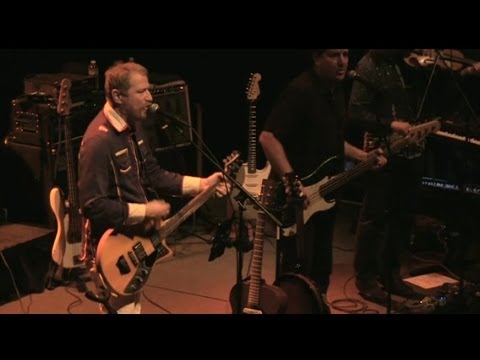
For three decades David Lowery has been writing songs and performing with his two alternative rock bands Cracker and Camper Van Beethoven.
He is a vocal critic of that industry, and particularly how technology – from illegal downloading to new streaming services – has made it harder for artists to keep control of their work and to earn a living from it.
But when he spoke to the BBC at his home in Richmond, Virginia, Lowery also took aim at today’s younger generation who, he says, have come to expect to listen to music for free.
Subscribe http://www.youtube.com/bbcnews
Check out our website: http://www.bbc.com/news
Facebook: http://www.facebook.com/bbcworldnews
Twitter: http://www.twitter.com/bbcworld
Instagram: http://instagram.com/bbcnews
source
A new personalised vaccine given in combination with a drug has stopped skin cancer returning in patients during a trial, representing a potentially watershed moment in cancer treatment. Scientists used mRNA technology, which was used for some Covid-19 vaccines.
But that technology – and vaccines more generally – have become increasingly controversial in the United States since the Covid-19 pandemic. The Health Secretary Robert F Kennedy Jr, is a vaccine sceptic.
In August 2025 cancelled $500m (£376m) in funding for mRNA vaccine research. The move impacted 22 projects being led by major pharmaceutical companies, including Pfizer and Moderna, for vaccines against bird flu and other viruses, according to Kennedy’s department.
We speak to Tom Whipple, host of the BBC’s Inside Science programme, about the science of this new vaccine. And we ask how funding cuts for vaccine research could impact health outcomes not just for Americans, but for the world.
0:00 How does the new mRNA skin cancer vaccine work?
2:56 How effective is the new cancer vaccine?
5:06 How do mRNA vaccines work?
6:51 How was mRNA technology developed?
10:26 How did Covid change mRNA vaccines?
12:01 Why is RFK Jr cutting mRNA funding?
15:19 Are mRNA vaccines safe?
18:48 Why is the FDA approving an mRNA flu vaccine?
21:00 What does the future of mRNA research look like?
Subscribe to our channel here: https://bbc.in/bbcnews
For the latest news download the BBC News app or visit BBC.com/news
#BBCNews
source
Tech UK
Historic first as Chinese robot beats Usain Bolt’s 100m world record at Beijing games | BBC News
A Chinese humanoid robot has run 100 metres in 9.39 seconds in a preliminary heat at the World Humanoid Robot Games in Beijing, surpassing the men’s world record time held by Jamaican sprinting great Usain Bolt.
Tiangong Ultra, developed by the Beijing Humanoid Robot Innovation Center, won its heat at the opening of the games’ second edition. The robot overtook smartphone maker Honor’s Lightning near the finish after falling behind early in the race. Lightning finished in 9.47 seconds, also faster than the 9.58-second record Bolt set at the 2009 World Athletics Championships in Berlin.
The results marked a remarkable improvement from last year’s inaugural games, when Tiangong Ultra won the 100 metres in 21.50 seconds. Tiangong also won the world’s first humanoid robot half-marathon, held in Beijing last year.
The 100 metres is among 51 events at the games, which include football, dancing and contests to complete industrial tasks.
China is promoting humanoid robots as a strategic emerging industry, with policymakers and companies betting that advances in AI and hardware will accelerate their use in manufacturing, logistics and consumer applications.
Investor enthusiasm for the sector was underscored recently when shares in Unitree, China’s best-known humanoid robot maker, jumped more than five fold in its Shanghai trading debut, giving the company a market value of about $50 billion.
This year’s games have drawn 2,056 robots from 666 teams across 16 countries and six continents, up from 280 teams at the inaugural event.
Clive Myrie presents BBC News at Ten reporting by Laura Bicker in Beijing.
Subscribe to our channel here: https://bbc.in/bbcnews
For the latest news download the BBC News app or visit BBC.com/news
#BBCNews
source
Every year, new reports warn that our roads are getting worse and potholes are becoming more common. Experts say the cost of …
source
Artificial intelligence was the technology lots of people wanted to talk about at the Dentistry Show in Birmingham, UK.
From 3D printing to digital scanners and AI receptionists, there are many ways in which technology is helping dentists’ workflow.
We tried some of the tech on display.
Subscribe to our channel here: https://bbc.in/bbcnews
For the latest news download the BBC News app or visit BBC.com/news
#AI #Dentistry #BBCNews
source
There was a time when sleeping was simple – but now, it’s a bit more complicated.
Sleep has rules – there’s the right bedtime, the right temperature, and the right amount of deep sleep.
It’s not just something we do, it’s something we measure.
But is all this number punching actually helping us rest?
Subscribe to our channel here: https://bbc.in/bbcnews
For the latest news download the BBC News app or visit BBC.com/news
#Sleep #Technology #BBCNews
source
-

 Food UK3 years ago
PANCAKES EXPERIMENT: SAME Ingredients DIFFERENT Techniques
-
Other UK3 years ago
The BBC is on obtained time and is quick ending up being Bri…
-
Fashion UK2 years ago
TDX x TB Rock Band EDJ (“All For You”) Full Song + Lyrics – Tower Defense X Roblox
-
Other UK3 years ago
Making it through an honour killing – BBC News
-
Other UK3 years ago
Could Reform Cost the Tories the Next Election?
-
Fashion UK1 year ago
HIGH ON YOU – Jind Universe | Latest Punjabi Love Song 2024
-
Other UK3 years ago
Prince Harry was victim of phone hacking by Mirror Group New…
-
Business UK2 years ago
Martin Daubney | Wednesday 27th November
-

 Business UK3 years ago
‘This is his top priority’ | Jake Berry on Tom Tugendhat’s economy plans
-

 Politics UK3 years ago
Ending Anonymity Online: Britain’s Plans to Change the Internet – TLDR News
@Tommomomomo
January 4, 2024 at 11:08 pm
I would never download anything without paying for it like. Unless its was something like the zero project where they give their own stuff away for free. I'd just feel like I was stealing from whoever made it.
@kdhfkjdgkjj
January 4, 2024 at 11:08 pm
Another university teacher, teaching compliance to the societal norms.
@SVAFnemesis
January 4, 2024 at 11:08 pm
I support anti piracy regulation because by doing that independent artists will have a lot better chance in sharing their music of royalty free. Why not let the "big shots" keep their music off the grid, it's not like they are really the only talents.
@smilersmiles
January 4, 2024 at 11:08 pm
Why on anything to do with anti piracy do they have to use the same damn font. You wouldn't steal the souls of children.
@Watrudoinsthap
January 4, 2024 at 11:08 pm
Piracy has been linked to increased profits for artists.
@magister343
January 4, 2024 at 11:08 pm
File sharing is indeed Amoral.
It is not however Immoral.
There is neither virtue nor vice involved.
It is not unethical.
Private property only makes sense for scarce goods. File sharing allows the information of digital files to become not meanly non-scarce, but anti-scarce.
It would be fine for a musician to refuse to share his music with anyone who did not first sign a personal contract not to share it with anyone else. There is no moral duty for those who never agreed to this not to share it or accept it being shared though.
If we consider copyright infringement theft, but want to take an old testament approach to punishing theft, then the only punishment could be to keep committing the crime. The proper punishment of theft is to pay back a multiple of what was taken, but a additional copy of non-scarce information is not worth much to someone who still has the original.
It makes more sense for musicians to ask their fans for donations than to try to control the flow of information.