
Tech UK
Who are this year’s most influential people? – BBC News


Frankie McCamley explains what Kylie Jenner, posh pottery and a Nobel Prize have to do with this year’s most influential people.
Speaking to experts in technology, politics, science, music, Bollywood, Hollywood and Instagram, Frankie compiles our alternative power hot list.
Producer: Phoebe Frieze
Presenter: Frankie McCamley
Please subscribe HERE http://bit.ly/1rbfUog
source
Artificial intelligence was the technology lots of people wanted to talk about at the Dentistry Show in Birmingham, UK.
From 3D printing to digital scanners and AI receptionists, there are many ways in which technology is helping dentists’ workflow.
We tried some of the tech on display.
Subscribe to our channel here: https://bbc.in/bbcnews
For the latest news download the BBC News app or visit BBC.com/news
#AI #Dentistry #BBCNews
source
There was a time when sleeping was simple – but now, it’s a bit more complicated.
Sleep has rules – there’s the right bedtime, the right temperature, and the right amount of deep sleep.
It’s not just something we do, it’s something we measure.
But is all this number punching actually helping us rest?
Subscribe to our channel here: https://bbc.in/bbcnews
For the latest news download the BBC News app or visit BBC.com/news
#Sleep #Technology #BBCNews
source
What if we could measure every leaf, branch and tree across the world’s forests?
New technologies are making that possible. Scientists are using satellites, laser scanners and AI to create super detailed 3D maps, revealing how much carbon is stored by forests and how they’re changing because of climate change and deforestation.
Tech Now’s Yasmin Morgan-Griffiths spoke to leading tree ecologists and went exploring in the woods to find out more.
Subscribe to our channel here: https://bbc.in/bbcnews
For the latest news, download the BBC News app or visit BBC.com/news
#ForestXRay #Technology #BBCNews
source
Could artificial intelligence one day become conscious? Or are we being distracted by science-fiction dreams while AI is already transforming the world of work right now?
In this fascinating edition of BBC AI Decoded, presenter Marc Cieslak and co-host Priya Lakhani, CEO of Century Tech, tackle one of the biggest questions in technology: will AI ever come alive, and what happens if it does?
Joining the discussion is bestselling author, digital rights activist and technology critic Cory Doctorow, whose new book The Reverse Centaur’s Guide to Life After AI challenges some of the biggest claims being made about artificial intelligence. Doctorow argues that today’s AI is not a conscious mind in waiting, but a powerful prediction machine surrounded by hype.
He explains his concept of the “reverse centaur”, a future in which humans increasingly find themselves working as assistants to machines, rather than the other way around.
Also on the programme is Dr Ella Hafermalz, Associate Professor of Knowledge, Information and Innovation at Vrije Universiteit Amsterdam, who explores how AI is reshaping workplaces, organisations and the future of employment.
Together, they examine growing fears that AI could replace millions of jobs, the rise of automation across white-collar industries, and whether the technology boom is creating unprecedented opportunities or a new age of economic insecurity. The panel also explores one of the most controversial debates in artificial intelligence: if advanced AI systems ever become conscious—or what philosophers call “moral patients”, would they deserve rights, protections or even a voice in society?
Subscribe to our channel here: https://bbc.in/bbcnews
For the latest news download the BBC News app or visit BBC.com/news
#AI #ArtificialIntelligence #BBCNews
source
A UK space company has successfully tested a key part of a nuclear fusion rocket engine that could one day make journeys to Mars much faster.
Pulsar Fusion’s Sunbird rocket uses the same process that powers the Sun to create extreme heat and thrust, with engineers hoping it could cut travel times through space.
The technology is still in development, but the team says the breakthrough could help transform future missions to the Moon, Mars and beyond.
Subscribe to our channel here: https://bbc.in/bbcnews
For the latest news download the BBC News app or visit BBC.com/news
#Space #Mars #NuclearFusion #BBCNews
source
-
 Food UK3 years ago
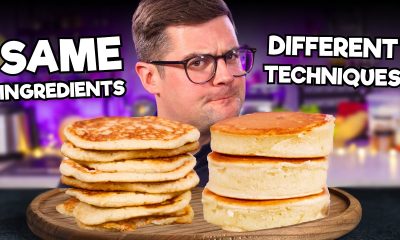
PANCAKES EXPERIMENT: SAME Ingredients DIFFERENT Techniques
-
Other UK3 years ago
The BBC is on obtained time and is quick ending up being Bri…
-
Fashion UK2 years ago
TDX x TB Rock Band EDJ (“All For You”) Full Song + Lyrics – Tower Defense X Roblox
-
Other UK3 years ago
Making it through an honour killing – BBC News
-
Other UK3 years ago
Could Reform Cost the Tories the Next Election?
-
Fashion UK1 year ago
HIGH ON YOU – Jind Universe | Latest Punjabi Love Song 2024
-
Other UK3 years ago
Prince Harry was victim of phone hacking by Mirror Group New…
-
Business UK2 years ago
Martin Daubney | Wednesday 27th November
-

 Business UK3 years ago
‘This is his top priority’ | Jake Berry on Tom Tugendhat’s economy plans
-

 Politics UK3 years ago
Ending Anonymity Online: Britain’s Plans to Change the Internet – TLDR News
You must be logged in to post a comment Login